
Structured Cabling Designed for What Comes Next
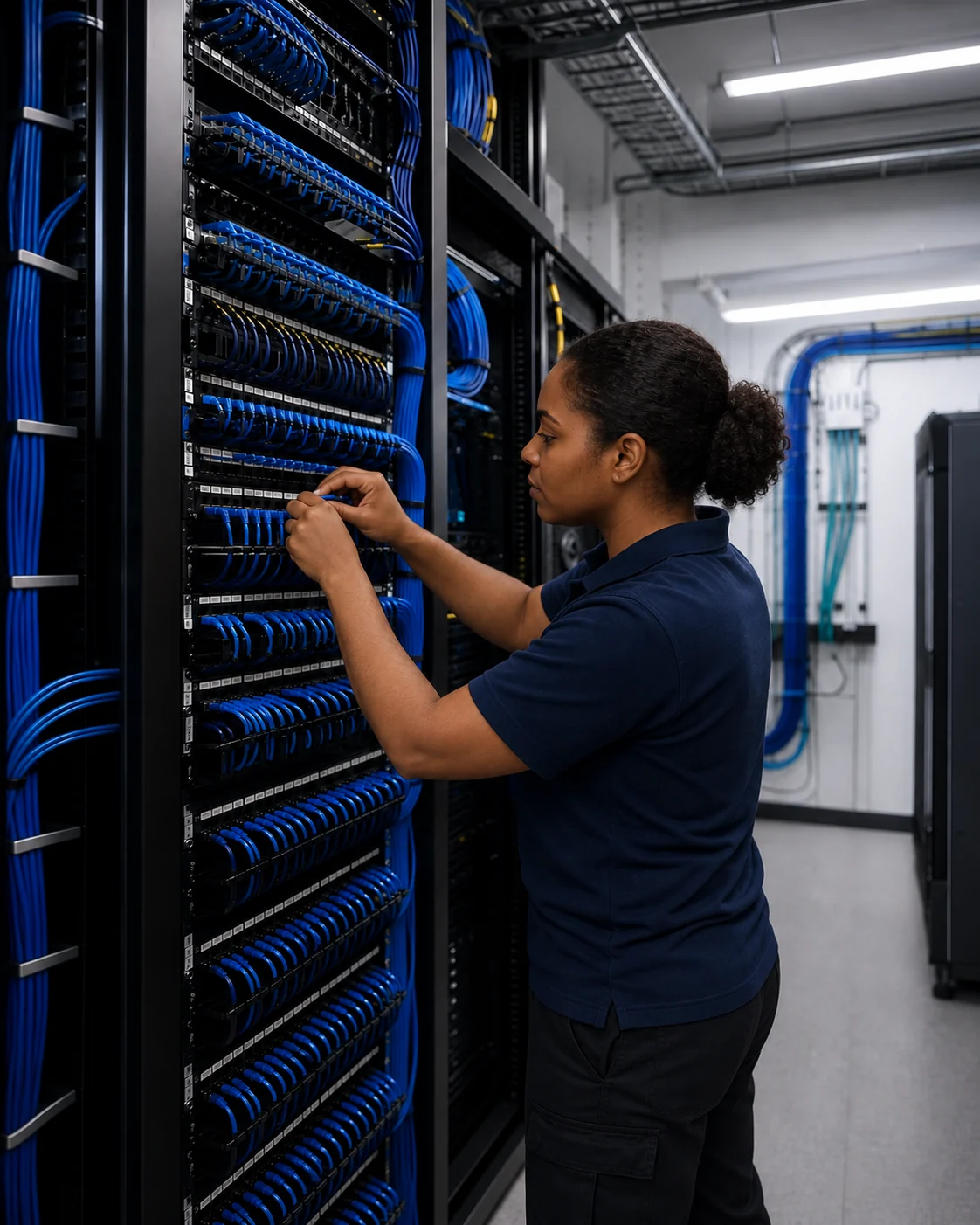
Structured Cabling
A Physical Network Foundation Built to Perform
The performance of your network starts long before data reaches a switch, server, or wireless access point. It starts with the physical infrastructure connecting everything together.
QuadPoint designs and installs structured cabling systems built around performance, organization, scalability, and long-term reliability.
From a new facility or major renovation to an infrastructure upgrade or expansion, we build the physical network foundation your technology depends on.
Build the Foundation Once. Build It Right.
Cabling is one of the longest-lasting components of your technology environment.
Network equipment will be replaced. Devices will change. Bandwidth requirements will increase. New technologies will be introduced.
The cabling behind those systems needs to keep up.
QuadPoint looks beyond simply connecting Point A to Point B. We consider how the infrastructure will be used, maintained, expanded, and supported over its lifecycle.
The result is a structured system that is easier to understand, easier to troubleshoot, and better prepared for future technology requirements.
Capabilities
Complete Structured Cabling Solutions
QuadPoint provides structured cabling services for new construction, existing facilities, expansions, renovations, technology upgrades, and infrastructure remediation.
01
Copper Cabling
Professional copper infrastructure for network-connected devices throughout your facility.
Solutions can include:
- Category 6 and Category 6A cabling
- Horizontal cabling
- Workstation and office drops
- Wireless access point cabling
- VoIP and communications infrastructure
- IP camera and security device cabling
- Building technology connections
- Patch panels and terminations
- Moves, adds, and changes
02
Fiber Optic Cabling
When distance, bandwidth, and performance requirements exceed traditional copper infrastructure, fiber provides the backbone.
QuadPoint supports high-speed connectivity within facilities, between telecommunications rooms, across campuses, and in data centers.
- Single-mode and multimode fiber
- Fiber backbone infrastructure
- Building-to-building and MDF-to-IDF connectivity
- Fiber termination and patching
- Testing and troubleshooting
03
MDF & IDF Buildouts
Your telecommunications rooms are the physical hubs of your network. QuadPoint creates clean, organized environments designed to keep equipment accessible and infrastructure manageable.
- Equipment racks and cabinets
- Patch panels and fiber enclosures
- Horizontal and vertical cable management
- Ladder rack and equipment mounting
- Grounding and bonding requirements
- Cable routing, identification, and labeling
04
Pathways & Cable Management
How cable gets from one location to another matters.
Proper pathways protect infrastructure, improve organization, simplify future additions, and help prevent tangled environments that make troubleshooting unnecessarily difficult.
QuadPoint can support cable trays, ladder racks, J-hooks, raceways, conduit pathways, and other cable-management requirements.
Structured Cabling for More Than Computers
Modern facilities depend on IP connectivity for far more than workstations. Planning these requirements together creates cleaner infrastructure and reduces the need to continually add cabling as new technology is deployed.
- Computers and workstations
- Servers, switches, and network equipment
- Wireless access points
- VoIP phones
- Surveillance cameras and access control
- Digital signage and building technology
- IoT devices and sensors
- Printers and peripherals
- Conference room technology
- Other network-connected systems
New Construction & Buildouts
The best time to think about network infrastructure is before walls and ceilings are closed.
QuadPoint works alongside owners, IT teams, general contractors, electrical contractors, architects, technology consultants, and other stakeholders to coordinate requirements during construction and buildout.
Early planning helps ensure telecommunications rooms, pathways, cable capacity, equipment locations, wireless infrastructure, security devices, and future expansion are accounted for before they become expensive changes.
Existing Infrastructure Upgrades
You don't necessarily need to start over. QuadPoint can evaluate existing environments and determine what can remain, what should be reorganized, and what needs to be replaced or expanded.
- Adding network drops or fiber backbone
- Replacing outdated cabling
- Increasing capacity
- Cleaning telecommunications rooms
- Replacing racks or patch panels
- Correcting labeling and removing abandoned cabling
- Supporting reconfigurations, wireless upgrades, and connected devices
Testing, Labeling & Documentation
Installation isn't finished when the cable is pulled. Infrastructure needs to be identifiable and verifiable.
QuadPoint incorporates testing, labeling, and documentation requirements into project closeout as appropriate to the scope.
- Cable testing and certification
- Fiber testing
- Cable, port, panel, and room identification
- Test results and port schedules
- Project photographs and as-built information
Good documentation saves time every time someone needs to troubleshoot, modify, or expand your network.
Designed Around Industry Standards
Structured cabling should be installed according to established practices—not improvised in the field.
QuadPoint plans and executes infrastructure with applicable project specifications, manufacturer requirements, building requirements, and recognized telecommunications and electrical standards in mind.
That attention to detail helps protect performance while creating infrastructure that can be supported for years after installation.
Project Lifecycle
Our Structured Cabling Process
01
Discovery
We review your facility, network requirements, device locations, project plans, technology needs, and expected growth.
02
Infrastructure Planning
Cable types, pathways, telecommunications spaces, device locations, racks, backbone requirements, and related infrastructure are identified.
03
Installation
Infrastructure is installed and terminated according to the approved scope and project requirements.
04
Testing
Connections are tested and validated according to the requirements of the project.
05
Identification
Cabling, ports, panels, and related infrastructure are labeled so the completed system can be efficiently managed.
06
Closeout
Required testing results, documentation, photographs, and other project information are assembled for handoff.
Cabling for a Single Facility or Multiple Locations
Standardization becomes increasingly important when an organization operates more than one location.
QuadPoint can help organizations establish repeatable cabling and installation requirements that can be applied across multiple facilities.
Instead of every location developing into a different infrastructure environment, your team gains greater consistency in equipment placement, cabling, labeling, testing, and documentation.
That makes future support considerably easier.
Infrastructure You Don't Have to Fight With
The best structured cabling is almost invisible.
It performs reliably. It's organized. It's properly identified. Your technicians can understand it. And when your organization grows, the infrastructure can grow with you.
That's what QuadPoint sets out to build.